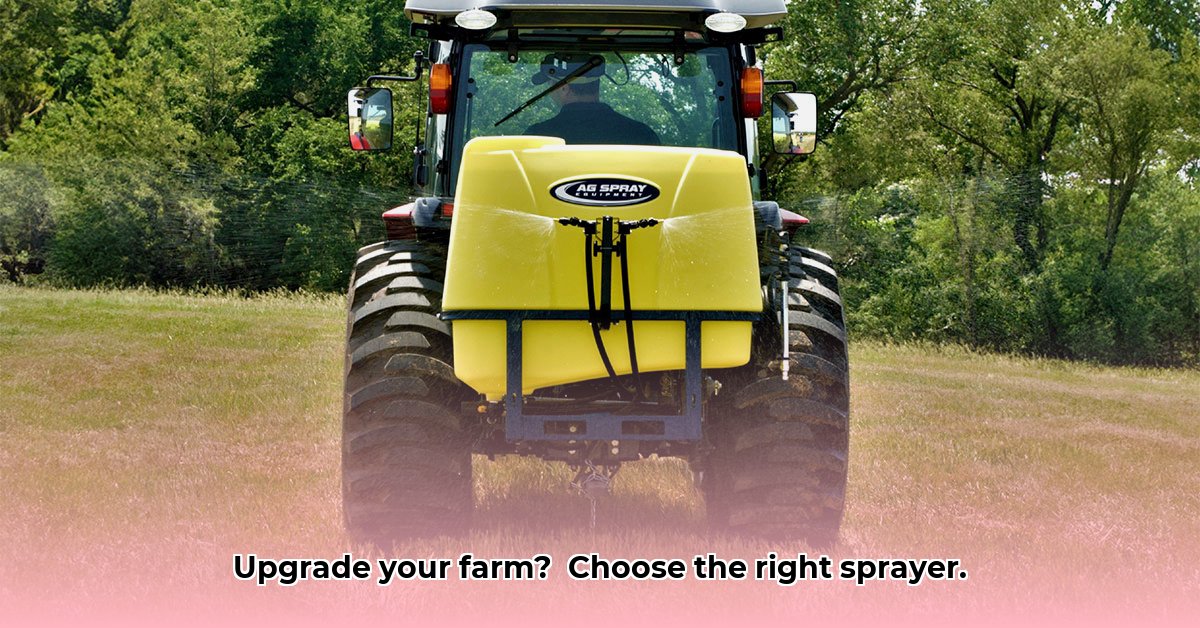
Selecting the ideal sprayer tank significantly impacts the efficiency and environmental sustainability of your farming operation. This comprehensive guide provides actionable steps to help you choose the right tank, ensuring both effective application and responsible resource management. For smaller operations, consider a 25-gallon sprayer.
Choosing the Right Tank Size: Matching Capacity to Needs
The perfect spray tank size depends entirely on your farm's scale and operational requirements. Small-scale farms, perhaps focused on a few acres, might find a 50-gallon tank perfectly adequate, offering ease of handling and maneuverability. Conversely, large-scale operations covering hundreds of acres might necessitate tanks in the 1000-gallon range or even larger. Don't guess; calculate. Consider your typical acreage per spraying session and your desired spray rate. This calculation will help you avoid the pitfalls of constantly refilling (leading to lost time and resources) or overspending on excessively large tanks. Accurate assessment is essential for optimal efficiency. What's your typical spraying area, and how often do you refill?
Material Selection: Durability, Cost, and Environmental Impact
The tank's material significantly impacts its lifespan and environmental footprint. Let's compare popular choices:
| Material | Pros | Cons | Environmental Impact |
|---|---|---|---|
| Polyethylene (Plastic) | Lightweight, relatively inexpensive, generally durable, easy to clean | Susceptible to UV degradation and cracking; chemical compatibility varies | Moderate |
| Stainless Steel | Extremely durable, highly corrosion-resistant, long lifespan | More expensive, heavier, can be more challenging to clean | Low |
Factors such as your budget, the chemicals you use, and the tank's expected lifespan should guide your decision. Stainless steel represents a large upfront investment, but its longevity can deliver significant long-term savings. Plastic offers a more affordable entry point, making it suitable for smaller operations or those with shorter-term needs. Which material offers the best balance of cost and longevity for your operation?
Pump Types and Efficiency: Optimizing Application
The pump is the engine of your sprayer, directly influencing application speed and consistency. Here's a comparison of common types:
| Pump Type | Pros | Cons | Ideal for |
|---|---|---|---|
| Diaphragm | Relatively low maintenance, steady flow | Lower pressure, less suitable for very thick liquids | Smaller operations |
| Centrifugal | High flow rate, suitable for large volumes | Higher maintenance requirements, less efficient at low flow rates | Larger-scale operations |
| Roller Pump | High pressure, self-priming, handles abrasives well | Higher initial cost, requires specialized maintenance | Abrasive chemicals |
Carefully assess your needs: High flow rates are essential for large-scale operations, while smaller farms may find a diaphragm pump sufficient and easier to maintain. Which pump aligns best with the demands of your farm’s spraying activities?
Nozzle Selection and Calibration: Achieving Precise Application
Nozzle selection—often overlooked—is crucial for minimizing drift and ensuring even application. Different nozzles create different spray patterns. Regular calibration is paramount to maintain consistent application and avoid chemical waste. Investing in a calibration kit is a worthwhile preventative measure that can save significant resource waste. Visual inspection of the nozzles for wear and tear is important for efficient application. How often do you recalibrate your nozzles to ensure optimal accuracy?
Integrating Precision Agriculture Technologies: Smart Spraying for Sustainability
Modern technology offers powerful tools for sustainable agriculture; GPS-guided sprayers and variable-rate technology (VRT) are among the most impactful. VRT dynamically adjusts application rates based on real-time data, minimizing chemical use and targeting only areas needing treatment. While the initial investment is substantial, the environmental and economic benefits often outweigh the costs, particularly on larger farms. Consider the long-term return on investment; how can precision agriculture improve your efficiency and reduce environmental impact?
Maintenance and Safety: Responsible Operations
Regular maintenance is key to preventing costly breakdowns and prolonging your sprayer's lifespan. This includes regular inspections, thorough cleaning after each use, and meticulous adherence to chemical handling protocols. Always consult the Safety Data Sheet (SDS) for each chemical used, and prioritize personal safety by wearing appropriate protective gear. The cost of preventative maintenance is far less than the expense of a major equipment failure. What preventative maintenance routine do you follow?
Case Studies: Real-World Successes
Many farms already demonstrate the benefits of sustainable spraying practices. Case studies reveal significant reductions in chemical use and improved application efficiency through careful tank selection, regular maintenance, and the adoption of modern technologies. Research and learn from the successes of other farms to identify strategies that work in your specific environment and farming practices.
Conclusion: Building a Sustainable Future
Choosing the right sprayer tank is a crucial decision that directly impacts the environmental sustainability and economic efficiency of your farming operation. By carefully considering tank size, materials, pump type, nozzle selection, and precision agriculture technologies, while prioritizing regular maintenance and safety, you can build a more sustainable and productive farming future. Remember, the long-term benefits outweigh the costs. Will the improvements in efficiency and environmental stewardship translate into a positive impact on your farm's profitability?